
When it comes to kitchen remodel flooring Centennial, a few key things make all the difference. Kitchen flooring is one of the most-used surfaces in any home, and in a remodel it is also one of the decisions that affects everything around it. The floor has to work with the cabinetry, the countertops, the traffic patterns, and the practical demands of a room that handles spills, grease, standing water, and heavy daily use. At Floor & More, we offer competitive flooring services for kitchen remodels from demolition through final installation, helping homeowners find the best value flooring that fits both their lifestyle and their budget. The flooring conversation is usually one of the earliest and most meaningful ones we have with homeowners across Centennial, Aurora, and Parker.
Why Kitchen Flooring Requires Its Own Set of Decisions
Kitchen floors take more than most surfaces in a home. Spills happen regularly. Grease and moisture work into seams and edges if the material or installation is not right. The room typically sees high foot traffic from multiple directions, and the floor has to hold up under appliances, chairs dragged across it, and everything else that gets set down in the course of a normal day.
Beyond durability, the kitchen floor is also a visual anchor. It connects the cabinetry, countertops, and walls into a single cohesive space. Getting the color, texture, and scale right matters as much as getting the material right, and those decisions are far easier to make when you can compare options in person rather than from a small sample card under store lighting.
Tile as the Standard Choice for Kitchen Floors
Tile is the most common choice in kitchen remodels for clear reasons. It does not absorb moisture, handles grease and spills without staining when properly sealed, and holds up under heavy daily use without showing wear the way softer materials do. Porcelain tile is the most durable option within that category, handling scratches and impact better than ceramic.
The design range with tile is broad. Large-format tiles minimize grout lines and make a kitchen feel more open. Smaller formats and patterned options add texture and visual interest. Natural stone such as travertine or slate brings warmth and variation that manufactured tile does not replicate. Our tile floor installation team works with ceramic, porcelain, and stone tile, handling layout, cutting, grouting, and finishing details as part of the full installation.
In a kitchen remodel, tile also gives flexibility with the rest of the design. A neutral large-format porcelain works with almost any cabinet color or countertop material. A patterned tile creates a focal point that the surrounding kitchen design is built around.
Luxury Vinyl Plank in Kitchen Spaces
LVP is fully waterproof and holds up well in kitchens, particularly in homes where comfort underfoot is a priority. It is softer than tile, which matters in a kitchen where people stand for extended periods during cooking or meal prep. It is also faster to install than tile, which can make a practical difference on a kitchen remodel with a tight timeline.
The trade-off is that LVP does not carry the same long-term durability as tile under the specific demands of a kitchen, especially near the sink or dishwasher where standing water is more common. In a kitchen that connects to a living area, running LVP through both spaces for a clean, consistent look is a practical choice that works well for many homeowners. Our luxury vinyl floor installation process includes full subfloor preparation, which is especially important in kitchens where the subfloor often shows more wear than in other rooms of the house.
How the Floor Fits Into the Full Kitchen Remodel Sequence
Flooring does not make sense to select in isolation from the rest of the kitchen remodel. The floor color and texture need to work with the cabinet finish, the countertop material, and the backsplash. It also needs to be installed in the right order relative to the other work happening in the space.
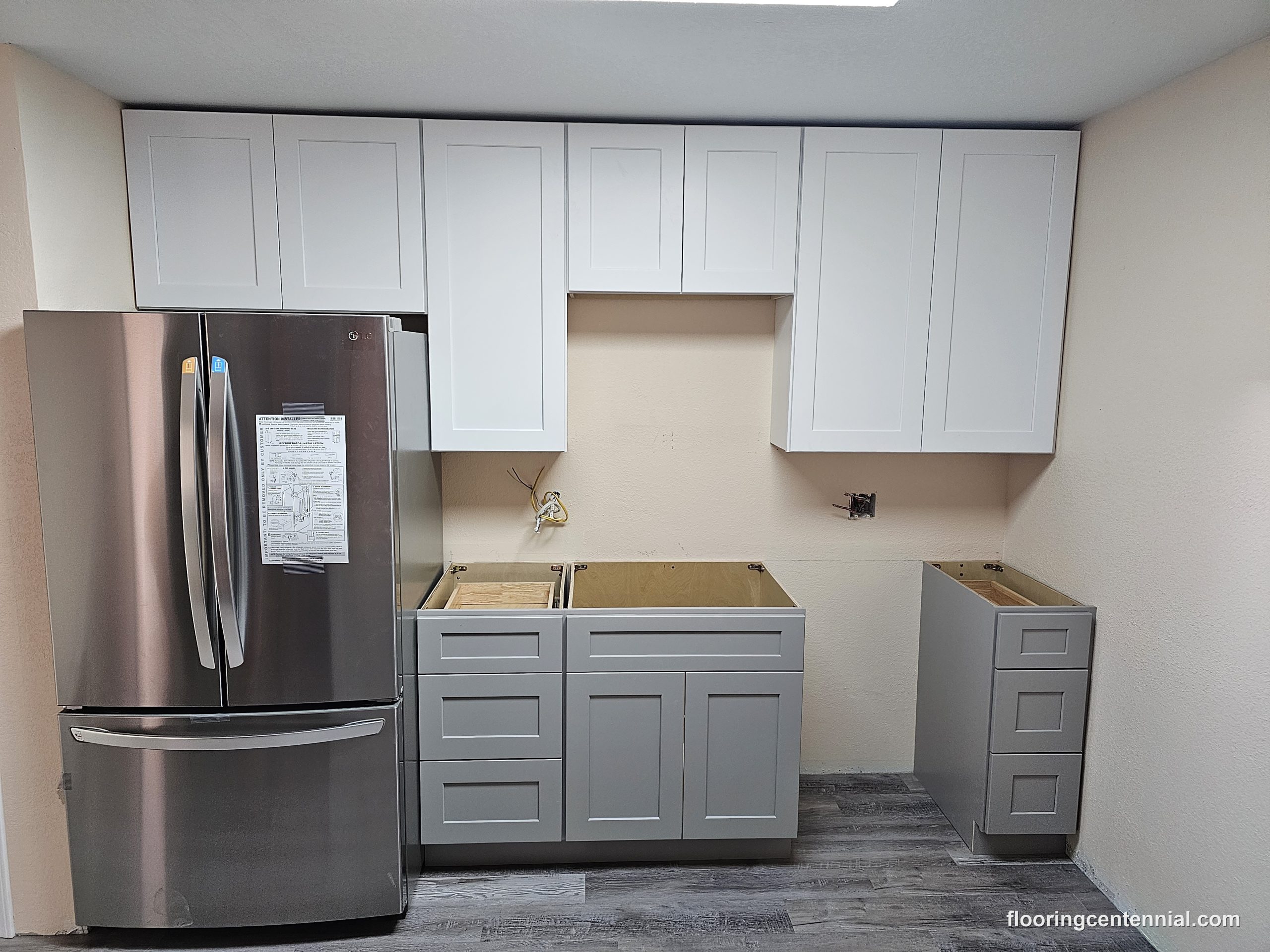
In our kitchen remodel projects, flooring goes in before cabinets in most cases, and countertops and backsplash follow after the cabinets are set. Getting that sequence right matters because cutting corners in the order of work creates problems at the transition points and adds rework time. Our team handles kitchen cabinetry installation and interior remodeling alongside flooring, which means the sequence is managed by one crew on one timeline rather than coordinated between separate contractors.
Lissette Valdez, one of our customers, had us handle her full bathroom, flooring, and kitchen in one engagement. As she put it, Oleg was honest, the team was hard working, and they went above and beyond to get the project done correctly and within the timeframe promised. Ready to talk through your kitchen remodel? Request a free estimate and we will walk through the full scope with you.
Stone Flooring and Natural Materials in the Kitchen
Stone flooring and stone countertop and backsplash combinations are among the more popular choices in kitchen remodels we work on. Granite, marble, and travertine bring natural variation and warmth that tile and vinyl do not replicate. They also hold up well in the kitchen environment when properly sealed and maintained over time.
The consideration with natural stone in a kitchen is that it requires sealing on installation and periodic maintenance to prevent staining. In a kitchen where spills are constant, that maintenance step matters. Our stone installation team handles natural stone for floors, countertops, and backsplashes, with all sealing and finishing included as part of the project.
Get a Free Estimate for Your Kitchen Remodel
Our showroom at 16728 E Smoky Hill Rd, Unit 10-A in Centennial carries samples across tile, stone, LVP, and other materials so you can compare your options in person. Vlad handles estimates and can walk you through the full scope of a kitchen remodel, from demolition through cabinetry, flooring, and countertops. Oleg leads the installation from start to finish.
Related topics:
- Durable Flooring Options for Centennial, CO Home Gyms
- What Are the Best Flooring Options for Centennial, CO Homes with Children?
For additional guidance, see the National Association of the Remodeling Industry.
Planning a kitchen update? Explore our kitchen cabinetry installation services.