
When it comes to innovative flooring materials to watch in centennial, a few key things make all the difference. The flooring category has changed more in the last decade than in the previous fifty years. New materials, improved manufacturing, and better installation systems have made products available today that simply didn’t exist at this quality level before.
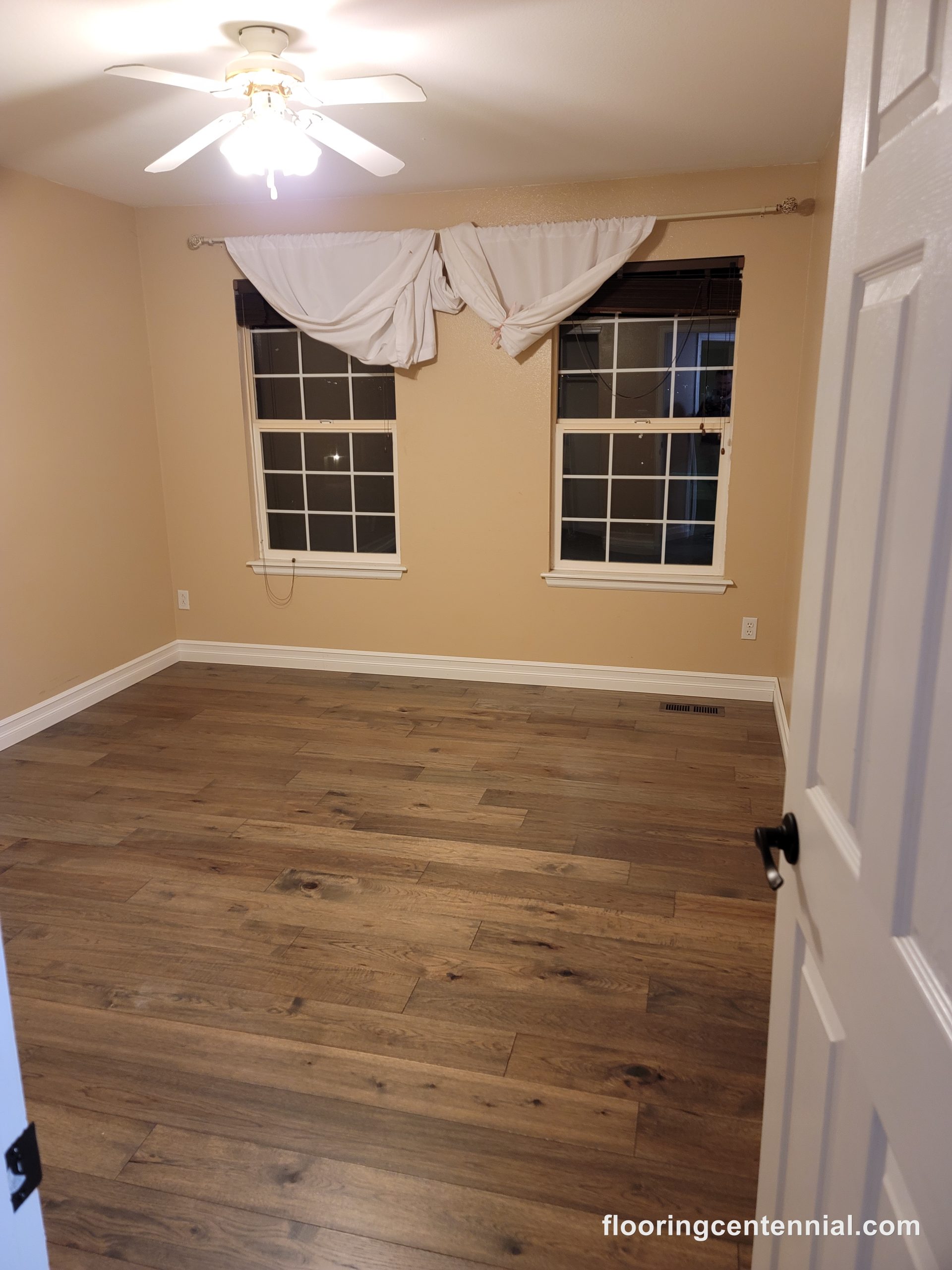
Whether you’re planning an innovative flooring installation for a single room or a full home update, knowing which developments are genuinely worth your attention, and which are just marketing noise, saves real money. The team at Floor and More has installed flooring across Centennial and the Denver south metro long enough to know the difference. Here’s what’s actually changing and what it means for your next project.
What Has Changed in Flooring Materials in Recent Years?
The most significant shift has been in rigid core luxury vinyl. Early LVP products were flexible, which made them susceptible to denting and required very flat subfloors. Rigid core technology changed that.
Today’s rigid-core LVP products feature a dense, stable core that resists denting, hides minor subfloor imperfections, and better handles temperature variation than older vinyl. The result is a product that installs faster, holds up longer, and looks significantly better underfoot than the LVP that was available even five years ago.
The wear layer has also improved. Residential products are now commonly available in 20-mil and above, a spec previously reserved for commercial installations. That means longer lifespan, better scratch resistance, and more durability over time.
What Is WPC and SPC Flooring?
These are two subcategories of rigid-core LVP worth understanding before you buy.
WPC, or Wood Plastic Composite, has a core that contains a blend of wood fiber and plastic, giving it a slightly softer feel underfoot. WPC is warmer and quieter than SPC and is generally preferred in bedrooms, living rooms, and spaces where comfort is a priority. SPC, or Stone Plastic Composite, has a denser and harder core made from limestone powder and plastic. SPC is more stable under temperature fluctuations and more resistant to heavy loads, making it the better choice for kitchens, basements, and commercial spaces.
Both are fully waterproof and represent a significant upgrade over flexible vinyl. The choice between them comes down to where the floor is going and how it will be used. The team handles luxury vinyl plank installation in both WPC and SPC products and can walk you through the right choice for each room during the estimate.
What Is Porcelain Tile With a Stone or Concrete Look?
Large-format porcelain tile has improved dramatically in how realistic its surface looks. Digital printing technology now allows manufacturers to reproduce the variations in natural marble, slate, concrete, and travertine with a level of detail that wasn’t achievable a decade ago.
The practical advantage is that you get the aesthetic of natural stone without the porosity, maintenance requirements, or weight. Porcelain doesn’t need to be sealed annually, doesn’t stain from wine, oil, or acidic cleaners, and handles moisture and temperature variation without issue.
For contemporary interiors in Centennial, large-format concrete-look and marble-look porcelain are among the most requested materials the team sees, particularly in kitchens, bathrooms, and entryways. Tile floor installation is available for floors, walls, and shower surrounds.
Are There New Hardwood Options Worth Knowing About?
The most useful development in hardwood is the improvement of engineered hardwood for Colorado’s climate. Colorado’s low humidity, particularly in winter, has historically made solid hardwood a higher-risk choice than in more temperate markets. Boards gap, cup, and crack under significant humidity swings. Engineered hardwood uses a plywood core to resist dimensional movement and has always been the more stable option here.
What has changed is the quality of the veneer layer on better-engineered products. Wire-brushed and lightly distressed surface textures now look and feel closer to site-finished solid hardwood than earlier engineered products did, and wear layers are also thicker on premium products. Some engineered hardwoods now offer a 6mm wear layer that can withstand multiple refinishing over its lifespan.
For homeowners who want the warmth and resale value of real wood without the risk of Colorado humidity damage, today’s engineered hardwood is genuinely the better option, not just a compromise. Current engineered hardwood options are available to see at the showroom, and hardwood floor installation estimates are free.
What Should Homeowners Know About Underlayment Improvements?
Underlayment used to be an afterthought. Better underlayment products now offer a combination of moisture barrier, sound absorption, and thermal insulation in a single layer. For LVP specifically, underlayment can significantly affect how the floor feels underfoot and how much noise it absorbs, which is particularly relevant in two-story homes where the floor above is also a ceiling below.
Many premium LVP products now come with underlayment pre-attached. For products without it, a separate underlayment appropriate to the subfloor type and installation method is worth the added cost. The right setup for each product gets discussed during the project scope review.
What New Materials Should Centennial Homeowners Watch?
Hybrid flooring is a relatively new category that combines a rigid core with a fiberglass layer for added dimensional stability. It is more common in Australia and Europe, but is entering the US market more broadly. Performance data is still limited compared to established WPC and SPC products, but early results are strong.
Matte-finish hardwood is not a new material but a finishing trend that has matured into a consistent preference for contemporary interiors. Matte-finish hardwood shows fewer scratches, fingerprints, and wear patterns than high-gloss finishes and ages more gracefully in high-traffic spaces.
Rectified porcelain tile is precision-cut to exact dimensions, which allows for very tight grout joints as narrow as 1/16 inch that give large-format tile installations a cleaner, more monolithic look. This is worth asking about if large-format tile is on your list.
How Does Our Team Stay Current on New Flooring Products?
The team carries over 50 years of combined experience in flooring and interior remodeling, and part of that experience is knowing which new products hold up over time and which ones don’t make it past the first installation cycle.
Oleg and Michael are directly involved in every project. When a new product comes into the showroom, they’ve installed it themselves before recommending it to customers. Interior remodeling construction, kitchen cabinetry installation, and window and door installation are also handled alongside flooring, which means new materials are seen in the context of a full renovation rather than in isolation.
See New Flooring Products in Person at Our Centennial Showroom
The showroom at 16728 E Smoky Hill Rd, Unit 10-A, Centennial, CO 80015 carries current LVP, hardwood, tile, and stone products across a full range of styles and price points. The team can show you what’s new, what’s proven, and what’s right for your specific rooms and conditions. A Room Visualizer is available on the website to preview options before visiting.
Call 303-993-6479 or request a free estimate online. Service area covers Centennial, Aurora, Parker, Highlands Ranch, Littleton, Englewood, Castle Rock, Lone Tree, and surrounding Denver south metro communities in ZIP codes 80010 through 80138. Showroom hours are Monday through Friday, 10 am to 6 pm, and Saturday, 10 am to 3 pm.
Related topics:
For additional guidance, see the National Association of the Remodeling Industry.
Not sure if we cover your neighborhood? Check out areas we serve.