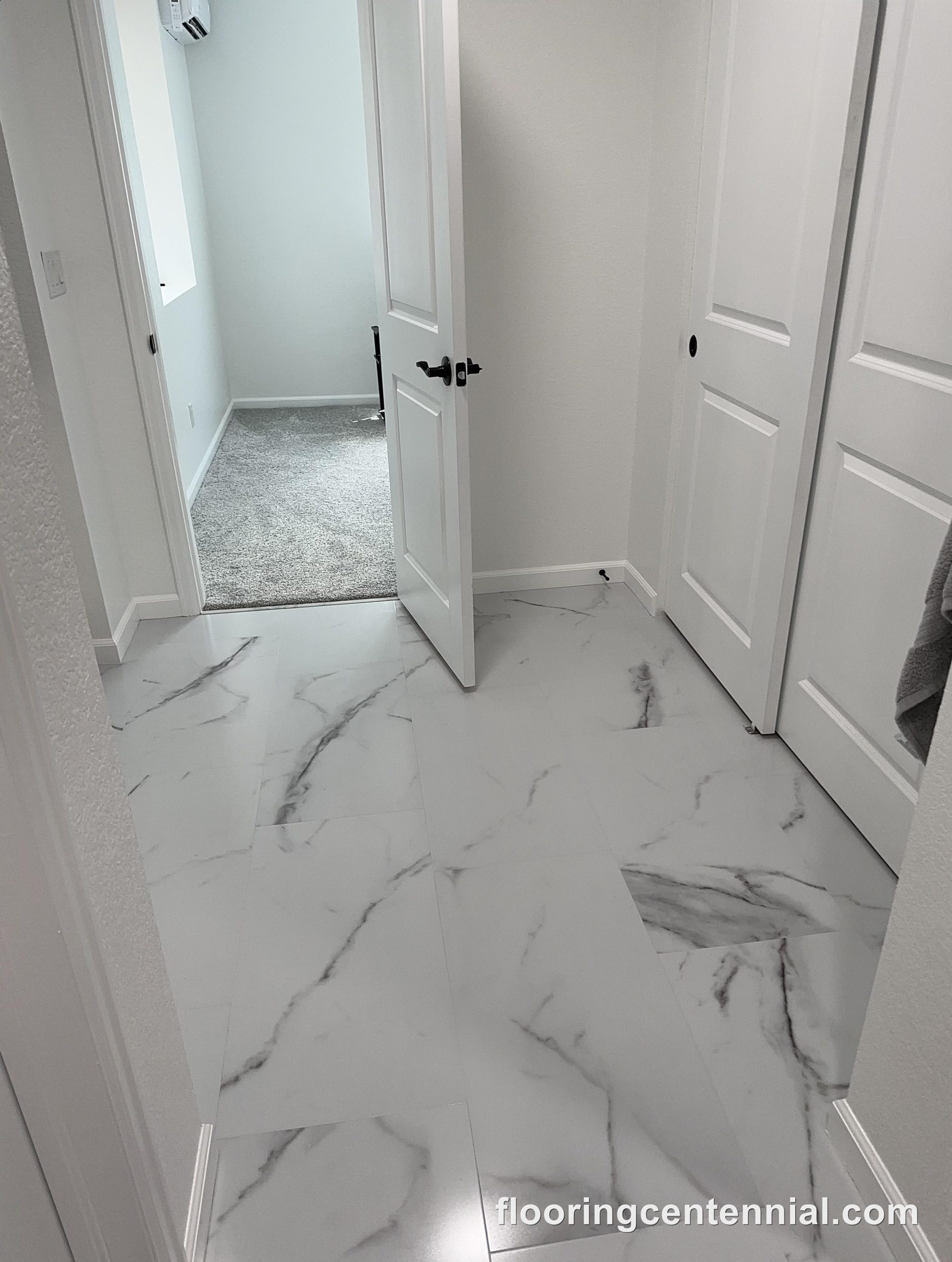
Flooring for High-Traffic Areas in Centennial, CO Homes
June 30, 2026
When it comes to flooring for high-traffic areas in centennial, a few key things make all the difference. An entryway, a main hallway, and a kitchen floor are not asking for the same thing a bedroom floor is. These spaces take on heavier foot traffic, more moisture, more grit tracked in from outside, and more daily wear than almost any other surface in the house.
If you’re searching for the best value flooring company, this is exactly the kind of decision that matters most, because picking the wrong material here doesn’t just mean a floor that looks worn before its time. It means paying for a full replacement years earlier than you’d planned. That’s why working with a reliable flooring team from the start makes such a difference. Below is what our crew recommends for the busiest rooms in homes across Centennial and the greater Denver area.
Why High-Traffic Spaces Demand a Different Standard
In a bedroom or low-use study, softer or more delicate flooring choices make practical sense because the wear is minimal. That reasoning does not carry over into hallways, kitchens, mudrooms, and main living areas. Those spaces face daily punishment from furniture legs, pet claws, shoes coming in from Colorado’s mix of dirt and snow, and regular spills from cooking and household activity. The material you choose has to handle all of that without showing it within a year.
Subfloor condition matters just as much as the material itself. A high-traffic area laid over a weak or uneven subfloor will start showing wear at the seams and transitions faster than the same material on a properly prepared surface. Our team checks and prepares the subfloor on every flooring installation we do, because skipping that step is the most common reason floors fail ahead of schedule.
Luxury Vinyl Plank for Everyday Durability
For most high-traffic areas in a Centennial home, luxury vinyl plank is the most practical material available. It is fully waterproof, which matters in kitchens and entryways where spills and tracked-in moisture are a daily occurrence. The wear layer on quality LVP products stands up to pet claws and heavy foot traffic without the finish breaking down the way softer materials do over time, and it handles scratches better than hardwood in those same conditions.
LVP also performs well in Colorado baselines, where temperature swings and below-grade moisture rule out hardwood as a reliable long-term option. Homeowners in Highlands Ranch, Parker, and Aurora frequently choose LVP throughout the main level for exactly this reason. Our luxury vinyl floor installationincludes full subfloor preparation so the floor goes down flat and holds up the way it should.
Tile for Kitchens, Mudrooms, and Entryways
Tile is the other high-performance option for the areas of the house that take the most punishment. Ceramic and porcelain tile are harder than any wood or vinyl product, close to impossible to scratch under normal household conditions, and straightforward to clean. For a mudroom that collects snow, dirt, and pet paws, or a kitchen where grease and food spills are a regular occurrence, tile is hard to beat on pure durability.
The real trade-off is comfort. Tile is harder underfoot and noticeably colder in winter, which matters in Colorado’s climate, especially in a main living area or kitchen where people spend hours on their feet. Pairing tile in high-traffic functional zones with a softer flooring option in adjacent spaces often gives homeowners the best of both. Our tile floor installationcovers ceramic, porcelain, and natural stone, with careful attention to layout, grout lines, and all finishing details.
Hardwood in High-Traffic Areas: What to Know Before Deciding
Hardwood can work in high-traffic areas, but it requires more care than LVP or tile and will show wear over time, particularly in softer wood species. If hardwood is the priority for a main living area or hallway, harder species like white oak, hickory, or maple hold up considerably better under regular foot traffic than softer domestic options.
Finish choice matters at least as much as species. A wire-brushed or hand-scraped texture hides daily scratches better than a high-gloss smooth finish, which shows every scuff and drag mark. Hardwood can also be refinished over decades, which LVP does not offer. Our hardwood floor installation covers species selection, subfloor preparation, and all finishing details, and we can walk through what would hold up best given your specific household situation.
Carpet: Where It Works and Where It Does Not
Carpet is not the right choice for a kitchen or mudroom. In the right application, though, it performs well for years. Bedrooms and finished basement spaces where traffic is lighter and comfort is the main goal are where carpet makes the most sense. For homeowners with kids or older family members, carpet in bedroom hallways provides a softer surface underfoot and better noise reduction than hard floors in those spaces.
For a finished basement used as a family room or play area, carpet is worth considering alongside LVP depending on how much moisture the space sees. Our carpet installation covers a range of styles and pile heights, and we can help match the padding to the room’s specific use and traffic level.
Getting the Right Material Into the Right Room
Picking one material for every surface in a home is not the goal. Matching it to what each specific area actually demands is. High-traffic functional spaces need hard surface floors that handle moisture and wear. Main living areas can go either direction depending on lifestyle. Bedrooms and quieter zones are where softer choices make more sense and tend to last longer.
Our showroom in Centennial carries samples from all of these categories, and you can compare them in person before committing to anything. We’re glad to walk through each room with you and give honest recommendations based on how your household actually uses the space — and if the project grows into cabinetry or a bigger remodel, we handle that too.