
When it comes to tile flooring installation best practices for, a few key things make all the difference. Tile is one of the most durable flooring materials you can put down, but it is also one of the least forgiving when installation gets rushed. A great looking tile floor sitting on a bad subfloor, paired with uneven grout lines or cuts placed in the wrong spots, will carry those flaws for the entire life of the floor. As a certified flooring company in Centennial, CO, Floor & More handles tile work across Centennial, Aurora, Parker, and Highlands Ranch, and our expert flooring team knows the finished result comes down to prep work and the small details that get nailed down before and during the job, not the tile you picked out.
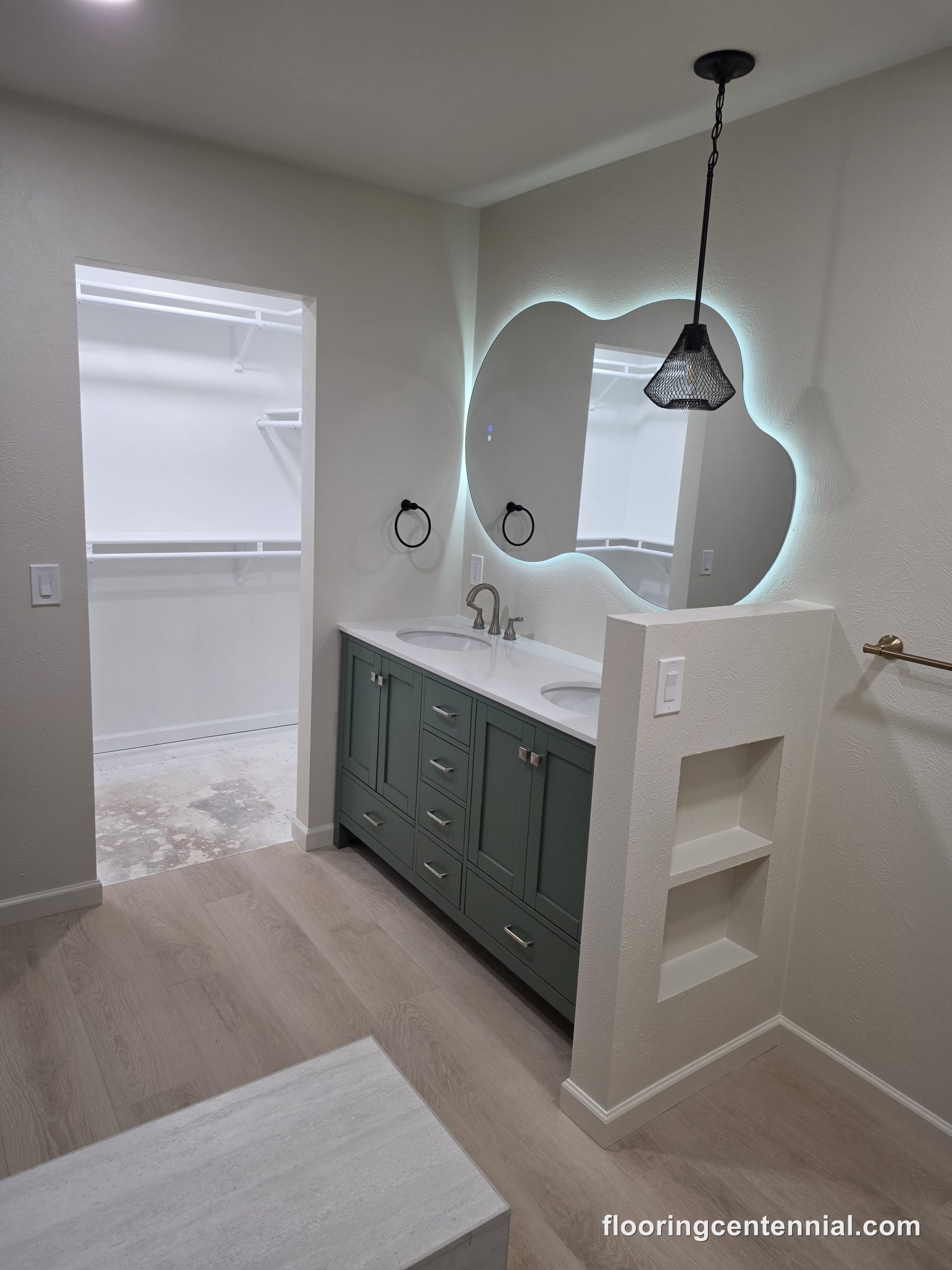
Why Installation Quality Determines How Long Tile Lasts
Tile does not hide poor workmanship. A hollow sound underfoot, cracked tiles within the first year, grout lines that are inconsistent or discolored, edges that are not flush at transitions, all of these are installation problems rather than material problems. The tile itself can last for decades when it is installed correctly. When it is not, no amount of material quality covers the result.
What separates a quality tile installation from a problem one is the preparation that happens before the first tile is set: the subfloor condition, the layout plan, the adhesive coverage, and the sequence of steps through to the final grout and seal. Skipping or rushing any of those steps creates problems that show up within months of the job being finished.
Subfloor Preparation Comes Before Everything
Tile requires a flat, stable, and structurally sound subfloor. Unlike vinyl or carpet, tile does not flex. If the surface underneath moves, shifts, or has low spots, the tile above it cracks at the stress point. A subfloor that works fine under LVP or carpet can fail completely under tile if it has any give or unevenness.
Our team assesses the subfloor condition before any tile goes down. That means checking for level across the full surface, identifying and repairing soft spots or damaged sections, and confirming the floor structure can carry the weight of the tile and setting materials. In kitchens and bathrooms, moisture is also a consideration. A subfloor with any existing moisture damage needs to be addressed before installation begins, not after the tile is already set.
Subfloor preparation is a standard part of every tile installation we do, not a separate service or an add-on step. Skipping it is the most common cause of tile failure within the first few years of installation.
Layout Planning Before the First Tile Is Set
Where the tile pattern starts determines where the cuts land at the edges of the room. In a kitchen or bathroom, cuts that land at awkward points such as very small slivers of tile at a doorway or uneven cuts on opposite walls make an otherwise quality tile job look unplanned and rushed.
Our team plans the layout before any tile is set, working from the visual center of the room outward. For large-format tiles, this step matters more than with smaller formats because there is less room to compensate for a layout that was not thought through. For patterned tile, the starting point determines how the pattern reads from the room’s main entry point, which has a significant effect on the visual outcome.
A good layout plan also accounts for obstacles: island bases in a kitchen, shower curbs in a bathroom, transitions to adjacent flooring in a hallway. Thinking through those points before setting any tile saves time and prevents cuts that have to be redone partway through the job.
Adhesive and Setting Materials
The setting material used for tile determines how firmly it bonds to the subfloor and how it performs under the specific demands of the room. In kitchens and bathrooms, where moisture and temperature changes are part of normal daily use, using the right mortar type and coverage matters for long-term performance.
Insufficient mortar coverage under a tile creates hollow spots. Hollow spots are where tiles crack under load or impact because there is no support directly below the stress point. Our installation process involves full coverage under each tile, not dot or edge coverage that leaves large unsupported areas in the field.
In bathrooms where a shower floor or wet area is involved, a waterproofing membrane under the tile adds protection that keeps moisture from reaching the subfloor over time. This detail matters for the long-term performance of the installation and is not something to skip in a high-moisture environment.
Grouting and Sealing
Grout is what finishes a tile installation visually and seals the joints between tiles. Getting grout application right means consistent joint width, full coverage in each joint, and a clean surface after excess is removed. Grout lines that are uneven, partially filled, or stained during application affect the look of the entire floor regardless of how good the tile itself is.
Grout color selection matters as much as the application. A dark grout on a light tile highlights every joint and creates strong visual contrast. A close-matched grout recedes and lets the tile read as a more continuous surface. Neither choice is wrong, but the selection significantly affects the overall look and is easier to evaluate in person at a showroom than from a photograph.
Sealing the grout after installation protects it from staining. In a kitchen where grease and food spills are part of daily use, a grout sealer is not optional. In a bathroom, sealing extends the life of the grout in a consistently wet environment. We seal tile grout as part of the installation process on every job.
Transitions and Edge Finishing
Where tile meets a different flooring material at a doorway or adjacent room, the transition needs to be clean, flush, and mechanically secure. A poorly installed transition strip creates a trip hazard, collects debris, and reads as unfinished. In a remodel where kitchen tile transitions to LVP or hardwood in a connected space, that transition point is a detail that is immediately visible when it is not done well.
Our tile floor installation process includes all transitions and edge finishing as part of the project. The final walkthrough with the homeowner covers every transition point, every edge, and every joint before the job is closed out.
When Tile Is Part of a Larger Kitchen or Bathroom Remodel
Kitchen and bathroom tile projects frequently sit inside a larger remodel scope. A kitchen tile floor goes in alongside new cabinetry, countertops, and a backsplash. A bathroom tile installation happens as part of a full renovation that includes flooring, tile walls, vanity, and fixtures.
When tile is part of a larger project, the sequence of work matters. Tile goes in before cabinets in most kitchen remodels. Shower tile happens after the rough plumbing is set and before the fixtures go in. Getting that order right is what prevents rework at the transition points between trades.
We handle interior remodeling, kitchen cabinetry installation, stone installation, and tile installation under one team. The sequence is managed by our crew from start to finish, which means each phase supports the next without gaps or rework between them. Ready to talk through your tile project? Request a free estimate and we will walk through the details with you.
Get a Free Estimate for Your Tile Project
Our showroom at 16728 E Smoky Hill Rd, Unit 10-A in Centennial carries tile samples across ceramic, porcelain, and natural stone. Oleg leads our installation projects and Vlad handles estimates, both bringing direct, hands-on experience to every job. We serve homeowners across Centennial, Aurora, Parker, Highlands Ranch, Castle Rock, and the broader Denver metro area.
Related topics:
- Tile Flooring Inspiration for Centennial, CO Kitchens and Bathrooms
- How to Choose Flooring for Your Centennial, CO Kitchen Remodel
For additional guidance, see the Tile Council of North America.
Thinking about a tile project? Explore our tile flooring installation services.