
When it comes to durable flooring options for centennial, co, a few key things make all the difference. Setting up a home gym takes more than picking the right equipment. The floor underneath carries the weight of every workout, whether that means heavy machines, high-impact movement, or the constant friction of daily training sessions. Standard residential flooring is not built for that kind of use, so investing in durable flooring from the start saves you from replacing it far sooner than you planned. At Floor & More, our efficient flooring team helps homeowners across Centennial, Aurora, and Parker find flooring that handles the demands of a home gym without compromising the look and function of the rest of the house.
What Gym Flooring Actually Has to Handle
Residential flooring is designed for foot traffic, furniture, and normal household use. A home gym adds a different category of stress: concentrated load from heavy equipment, impact from jumping or weights being set down, moisture from sweat, and friction patterns that wear through softer surfaces quickly.
The right flooring for a home gym needs to handle all of that without cracking, delaminating, or breaking down at the surface. It also needs to function within the rest of the home’s aesthetic if the gym connects to a finished basement or converted living space. Colorado basements add another layer of consideration, since below-grade spaces deal with moisture and temperature swings that certain flooring types cannot handle over time.
Luxury Vinyl Plank for Basement and Below-Grade Gym Spaces
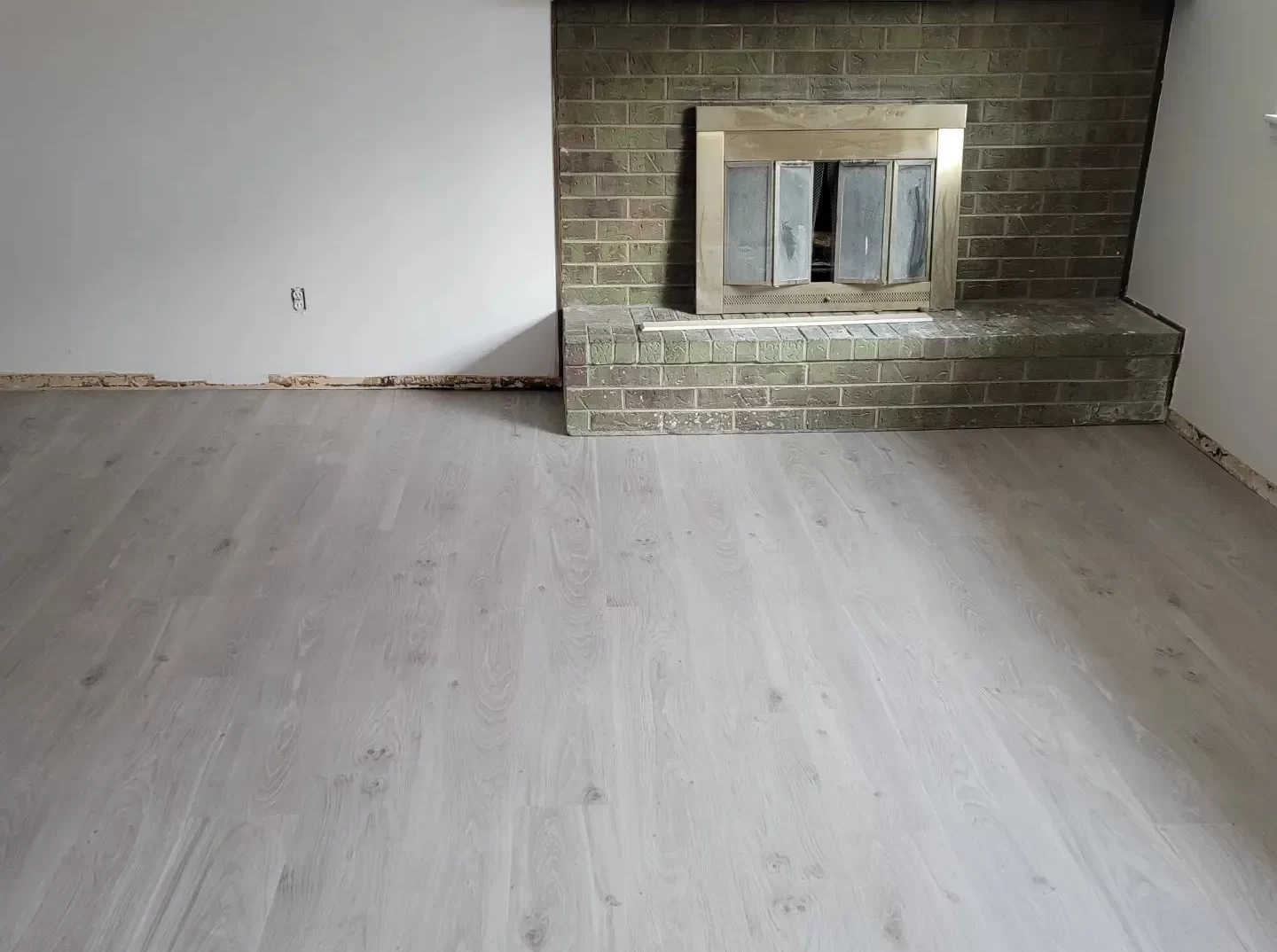
Luxury vinyl plank is one of the most practical choices for home gyms, particularly in basement and below-grade spaces common across Centennial and Aurora homes. It is fully waterproof, meaning sweat, spilled water, and ambient humidity from a Colorado basement do not work their way through the material and damage the subfloor beneath. It handles friction and surface stress from gym use better than standard hardwood or laminate.
LVP is also more comfortable underfoot compared to tile, which matters for any workout involving extended standing, jumping, or bodyweight movement on the floor. The surface is easy to clean and does not retain the odors or bacteria that softer materials can develop with consistent heavy use. Our installation process includes full subfloor preparation before anything goes down, which is particularly important in a gym space that will carry heavy equipment. An uneven or damaged subfloor creates instability and soft spots that become a problem the moment heavy machines sit on the surface.
Tile for Maximum Durability
Tile is the most durable hard-surface option we install, and in a home gym where heavy equipment and high-impact use are part of the daily routine, it is worth considering. Porcelain tile in particular handles concentrated weight, moisture, and sustained hard use without deteriorating the way softer materials do.
The practical consideration with tile in a gym is that it is hard and unforgiving underfoot. For workouts involving a lot of jumping, ground contact, or extended standing, tile alone can be uncomfortable. Most homeowners who choose tile in a gym pair it with equipment mats in the areas where machines sit and exercise mats in the training zones. That handles the comfort concern while keeping the floor durable and easy to clean everywhere else.
Our tile floor installation team handles layout, cutting, grouting, and all finishing details, including work in basement gym spaces where subfloor prep needs extra attention before tile can go down.
Subfloor Preparation Is Not Optional in a Gym
In any flooring installation, subfloor preparation is part of the process. In a home gym, it matters more than in almost any other room in the house. Heavy equipment creates concentrated load on specific points of the floor. If the subfloor beneath is uneven, soft, or damaged, that concentrated weight accelerates wear and can cause the finished floor to crack, shift, or separate at the seams.
Our team assesses the subfloor condition before any installation begins, repairs what needs repairing, and confirms the surface is level and structurally sound before anything goes down. This is a standard part of how we work on every job, not an add-on step that gets negotiated at the estimate.
When the Gym Is Part of a Larger Remodel
Many home gym projects start as something larger than a flooring swap. A basement that needs framing work, a spare room that requires the existing carpet pulled and walls addressed, or a space that needs layout work before equipment can go in all call for more than just an installation crew.
Our team handles interior remodeling work alongside flooring, which means we can manage the full scope of a gym conversion without coordinating between separate contractors. Demolition of existing material, subfloor work, and new flooring installation all run under one project and one timeline. Ready to plan your gym project? Request a free estimate and we will walk through the full scope with you.
Get a Free Estimate for Your Home Gym Project
Our showroom at 16728 E Smoky Hill Rd, Unit 10-A in Centennial carries samples across LVP, tile, and other flooring types so you can compare materials in person before making any decisions. Vlad handles estimates and can walk you through the full scope of a gym project, from flooring selection to any remodeling work the space requires.
Related topics:
- What Are the Best Flooring Options for Centennial, CO Homes with Children?
- Tile Flooring Installation Best Practices for Centennial, CO Kitchens and Bathrooms
For additional guidance, see the National Association of the Remodeling Industry.
Not sure which material is right for you? Browse all of our flooring options.